
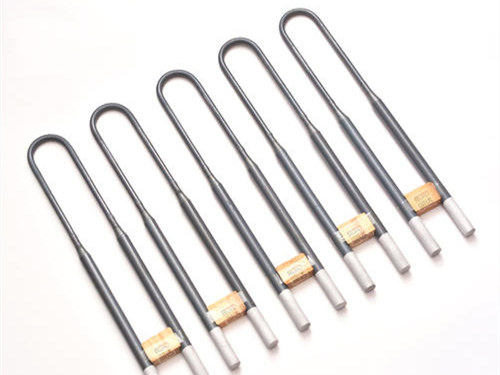
MoSi2 Heating Elements
U Type MoSi2 Heating Elements for Kilns and Muffle Furnaces
U type MoSi2 heating elements for kilns, box furnaces, trolley furnaces, muffle furnaces and high-temperature electric furnaces.
View details
MoSi2 Heating Elements
Compare MoSi2 heating elements, also called molybdenum disilicide heaters, by U or W type, grade, furnace conditions, price factors and the RFQ data needed for a supplier review.
Use this page to narrow the product direction, then email info@hnlasting.com with the operating parameters so Henan Lasting can review the specification.
Recommended Products
MoSi2 Heating Elements
U type MoSi2 heating elements for kilns, box furnaces, trolley furnaces, muffle furnaces and high-temperature electric furnaces.
View details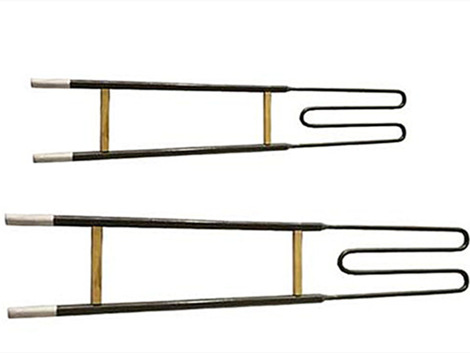
MoSi2 Heating Elements
W type MoSi2 heating elements for short furnace chambers and compact high-temperature electric furnace designs.
View detailsMoSi2 heating elements are used in kilns, box furnaces, trolley furnaces, muffle furnaces and high-temperature electric furnaces.
Searches for MoSi2 heating element price usually come from real replacement or furnace-building work. A useful supplier reply should not be based on a generic unit price only, because the same product name may cover different element grades, shapes, hot-zone lengths, cold ends, electrical loads and accessory scope.
| Quotation factor | What changes the quote | Buyer action before asking for price |
|---|---|---|
| Element shape and grade | U type or W type, 1700 or 1800 grade, diameter and shank layout. | Send the old element photo, drawing or furnace layout instead of only a product name. |
| Dimensions | Hot zone length, cold end length, leg spacing and overall installed height. | Measure each field separately and mark uncertain values clearly. |
| Electrical match | Voltage, power, current, resistance, transformer range and circuit grouping. | Share nameplate data or operating records when available. |
| Furnace condition | Working temperature, atmosphere, duty cycle, chamber size and installation clearance. | Describe the process condition so the supplier can review material grade and surface load. |
| Commercial scope | Quantity, spare quantity, accessories, destination country and packing needs. | Ask each supplier to state assumptions and exclusions so every price covers the same scope. |
If the request is a replacement project, compare this page with the MoSi2 element replacement specification guide, then send one consistent data set through the heating element RFQ form.
Overseas buyers search for these elements in several ways: MoSi2 heating element, MoSi2 element, MoSi2 heater or the full material name molybdenum disilicide (MoSi2) heating element. They all describe the same family of high-temperature furnace elements. For a quotation, the deciding factors are the element shape (U type or W type), the furnace temperature and atmosphere, and the element dimensions rather than the exact search term.
Localized procurement searches can use a translated product name even when the buyer needs the same MoSi2 furnace element. For example, grzałki MoSi2 is a Polish search phrase for MoSi2 heating elements. The useful next step is to normalize the request into an English technical specification instead of quoting from the translated name alone.
| Search or inquiry wording | Standard product entity | RFQ fields to confirm |
|---|---|---|
| grzałki MoSi2 | MoSi2 heating elements, also called molybdenum disilicide heating elements. | Furnace type, U or W shape, grade, working temperature and atmosphere. |
| MoSi2 heater or MoSi2 element | The same MoSi2 resistance-heating element family. | D1, D2, hot zone Le, cold end Lu, shank spacing, voltage, power and quantity. |
| Localized supplier or replacement request | A new-furnace or replacement MoSi2 element inquiry. | Destination country, drawing, installed-element photos, terminal photos and accessory scope. |
Send the normalized specification through the heating element RFQ form. Buyers can compare U type MoSi2 elements and W type MoSi2 elements before attaching the furnace drawing.
U type MoSi2 heating elements support common high-temperature furnace layouts. W type MoSi2 heating elements are suitable for shorter furnace chambers and compact furnace structures.
When buyers compare MoSi2 heating element suppliers, the useful page is usually not only a product name. It should make the element shape, furnace temperature, atmosphere, surface load, installation method and RFQ route easy to check before contacting the supplier.
| Comparison point | What to check on a supplier page | RFQ note |
|---|---|---|
| Element shape | U type, W type, straight, bent or multi-shank layout. | Send a drawing or installed-element photo if the shape is uncertain. |
| Furnace fit | Muffle furnace, box furnace, kiln, trolley furnace or other high-temperature electric furnace. | Include chamber size, installation height and element position. |
| Operating limits | Material grade, furnace temperature, atmosphere and surface load guidance. | Do not compare only by maximum temperature; review the real furnace condition. |
| Quotation path | Clear RFQ fields, product links, contact email and supporting technical documents. | Prepare voltage, power, resistance, quantity and replacement evidence before asking for price. |
These MoSi2 heating element parameters help buyers compare material grade, atmosphere and surface load before sending a furnace specification.
| Parameter | Technical reference | Buyer note |
|---|---|---|
| Material grades | 1700 and 1800 | Use grade together with shape and dimensions when requesting a quote. |
| Applicable temperature | 500-1700℃ | Actual furnace use depends on atmosphere, structure and surface load. |
| Maximum in air | RS17: 1700℃; RS18: 1800℃ | Oxidizing atmosphere allows the protective SiO2 film to form. |
| Nitrogen | RS17: 1600℃; RS18: 1700℃ | Confirm atmosphere before selecting element grade. |
| Argon or helium | RS17: 1600℃; RS18: 1700℃ | Use as a reference for inert atmosphere furnace review. |
| Hydrogen | 1100-1450℃ | Provide hydrogen condition details in the RFQ message. |
| N2/H2 95/5% | 1250-1600℃ | Use exact gas mix and target temperature for specification review. |
| Low-temperature oxidation risk | Avoid long-term operation at 400-700℃ | Long operation in this range may cause powdering because of strong low-temperature oxidation. |
| Furnace temperature | Recommended hot-zone surface load |
|---|---|
| 1400℃ | <18 W/cm² |
| 1500℃ | <15 W/cm² |
| 1600℃ | <12 W/cm² |
| 1650℃ | <10 W/cm² |
| 1700℃ | <8 W/cm² |
For long service life, surface load should be selected together with furnace structure, atmosphere and operating temperature.
| Installation or operation item | Technical guidance | Buyer note |
|---|---|---|
| U type installation | Vertical hanging from the furnace crown is recommended. | This helps avoid mechanical stress on the hot zone. |
| Element holder | The holder bears the element weight and determines position. | Install carefully so the element is plumb. |
| Taper position | The lower taper part should extend into the furnace chamber. | Do not leave it in the furnace crown, which may cause local overheating. |
| Connection strap | Use aluminum braid wire or multi-layer aluminum foil. | The outside clamp secures the element and is not used as the conductor. |
| Clamp temperature | Generally not higher than 200℃. | Keep at least 50mm between the lower clip end and the upper brick surface. |
| Current limit note | 6/12mm should not be used long term at 170A; 9/18mm should not be used long term at 300A. | Send voltage, current and element diameter for review. |
| Furnace type | Temperature range | Voltage step |
|---|---|---|
| Small furnace, power below 100kW | 20-150℃ | 1/3 working voltage |
| Small furnace, power below 100kW | 150-500℃ | 2/3 working voltage |
| Small furnace, power below 100kW | 500℃ to working temperature | Full working voltage |
| Large furnace, power 100-500kW | 20-300℃ | 1/3 working voltage |
| Large furnace, power 100-500kW | 300-700℃ | 2/3 working voltage |
| Large furnace, power 100-500kW | 700℃ to working temperature | Full working voltage |
New or long-idle furnaces should be dried before use. For large furnaces, stronger monitoring is recommended during the drying process.
Buyers in India, North America, Europe or other overseas markets often search for MoSi2 heating element suppliers when they need a replacement element or a new furnace quotation. A complete RFQ should separate furnace data, element data and commercial scope.
For custom or uncertain furnace layouts, compare the custom furnace heating elements guide before sending the RFQ.
FAQ
Yes. MoSi2 heater, MoSi2 element and molybdenum disilicide heating element all refer to the same family of high-temperature furnace elements. For a quotation, focus on element shape (U or W type), furnace temperature, atmosphere and dimensions rather than the search term.
Grzałki MoSi2 is a Polish search phrase for MoSi2 heating elements. For an English-language RFQ, identify the product as a molybdenum disilicide heating element and provide furnace type, U or W shape, grade, dimensions, temperature, atmosphere, electrical data and quantity.
U type elements are common for many furnace layouts, while W type elements can be useful where furnace height is limited.
Compare whether the supplier page clearly shows element shapes, material grade, furnace applications, atmosphere limits, surface load guidance, installation notes, RFQ fields and a direct contact route.
Send furnace type, chamber size, target temperature, atmosphere, U or W type shape, hot zone, cold end, shank diameter, leg spacing, voltage, power, resistance, quantity, drawings and installed-element photos when available.
Price depends on element grade, U or W shape, hot zone length, cold end length, shank diameter, leg spacing, electrical data, furnace atmosphere, quantity, accessories and whether drawings or replacement photos are available.
Confirm furnace size, target temperature, electrical requirements, element shape, installation space and quantity.
Recommended hot-zone surface load is below 18 W/cm² at 1400℃, below 15 W/cm² at 1500℃, below 12 W/cm² at 1600℃, below 10 W/cm² at 1650℃ and below 8 W/cm² at 1700℃.
Strong low-temperature oxidation in this range may cause MoSi2 elements to powder.
Request A Quote
For faster review, include element type, diameter, hot zone length, cold end length, resistance, furnace temperature, quantity and application.