
SiC Heating Elements
SiC Heating Elements Supplier for Industrial Furnaces
SiC heating elements supplier in China for industrial furnaces, covering silicon carbide rod types, technical data, supplier comparison and RFQ requirements.
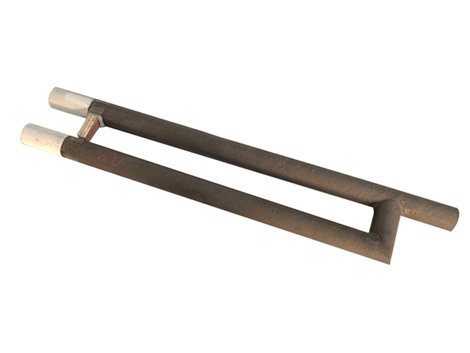
SiC Heating Elements
H type silicon carbide heating elements for high-temperature furnaces, with dimension, operating, terminology and replacement RFQ guidance.
The silicon carbide heating element is a kind of non-metal high temperature electric heating element. It is made of selected super quality green silicon carbide as main material.which is made into blank,silicided under high temperature and re-crystallized. Compared with metal electric heating element,this kind of element is characterized by high-applied temperature,anti-oxidization,easy installation and maintenance. Therefore, it is widely used in various high temperature electric furnaces and other electric heating devices, such as in the industries of magnet, ceramice, powder metallurgy, glass metallurgy and machinery,etc.
1. High working temperature: 1400C.
2. Long time last.
3. Varous type available. Rod, U, W, Single Spiral, Double Spiral.
1. High working temperature: 1500C (Surface Temperature)
2. Various shapes: Rod, U, W, Single Spiral, Doule Spiral shapes are availible.
3. Large size range: Diameter 14-54mm, Length 200-4500mm.
4. Fast Delivery: Normal quantity can be ready in 10 days.
5. Very competitive prices.
1. SiC Heating rod is heated in the air after the formation of a silicon oxide film compact surface,Into a protective film to protect the antioxidant, play a role in prolonging life. In recent years, our company developed a variety of silicon carbide coating to prevent cracking, for a variety of gas furnace.
2. Continuous use of silicon carbide, hoping to slow increasing resistance to maintain long life.
3. Globar as far as possible in parallel. If the silicon carbide with different resistance and series resistance of silicon carbide rod load, resulting in a rapid increase in a silicon carbide rod resistance, shorter life expectancy.
4. After the silicon carbide rod with the temperature higher lifetime is shorter, so in the furnace temperature super 1400 DEG C, accelerate the oxidation rate, shorten life. Use note try not to let the silicon carbide surface temperature is too high.
For H type SiC heating element inquiries, use the general equal-diameter SiC rod range as the technical starting point and confirm final shape dimensions from drawings or replacement samples.
| Dimension code | Meaning | What buyers should provide |
|---|---|---|
| OD or Dia | Element outside diameter | Measure the rod body or provide the drawing dimension. |
| HZ | Hot zone length | Match the active heating area inside the furnace chamber. |
| CZ | Cold end length | Match wall thickness, terminal position and connection space. |
| OL | Overall length | Measure the full element length from end to end where applicable. |
| A / D | Leg center distance or connection bridge | Required for U, CU and W shaped elements. |
For equal-diameter SiC rods, standard DH and DL specification tables cover the following practical ranges.
| Reference group | Diameter | Hot zone length | Cold end length | Overall length | Electrical data at 1000℃ |
|---|---|---|---|---|---|
| DH higher-resistance rod | 8-30mm | 100-1700mm | 100-400mm | 300-2300mm | Voltage 30-280V, power 430-24000W, resistance 0.6-6.0Ω |
| DL lower-resistance rod | 12-54mm | 150-3000mm | 100-650mm | 350-4300mm | Voltage 35-374V, power up to 62010W, resistance about 0.30-3.21Ω |
The general Lasting SiC rod diameter range is 8-54mm, with listed rod length up to 4300mm. Send OD, HZ, CZ, OL and resistance if the project is a replacement.
| Operating item | Technical value | Buyer note |
|---|---|---|
| Maximum element temperature | Up to 1600℃ in clean dry air | Atmosphere may reduce the practical service temperature. |
| Recommended surface loading | 3-8 W/cm² for furnace design | Lower surface loading is preferred when longer service life is required. |
| Resistance measurement | Measure at 1000℃ or above from voltage and current | Room-temperature resistance does not represent high-temperature resistance. |
| End of functional service life | Resistance reaches 3 times the original value | Keep voltage, current and resistance records for later replacement. |
| New element operation limit | Voltage not over 80% of test value; power not over 65% of test value | Use rated test values only for calibration review. |
The following installation and electrical rules are useful for furnace builders and replacement projects.
| Item | Recommendation | Why it matters |
|---|---|---|
| Element center to element center | Minimum 2 times element diameter; 2.5-3 times is recommended | Helps reduce local overheating and short-circuit risk. |
| Element center to furnace wall | At least 1.5 times element diameter | Leaves space for heat radiation and installation tolerance. |
| Element center to heated product | At least 2 times element diameter | Helps avoid direct obstruction and uneven radiation. |
| Preferred circuit connection | Parallel connection is preferred where possible | Small resistance changes tend to balance during use. |
| Series connection | Up to 4 elements when resistance is well matched; limit to 2 above 1400℃ | Reduces overload risk when resistance changes over time. |
| Resistance matching | Series: +/-5%; parallel: +/-10% | Useful when grouping elements for replacement and maintenance. |
| Voltage reserve | Usually 50%-100% above the voltage required by new elements | Allows the power supply to compensate for resistance aging. |
Buyers may encounter both H type silicon carbide heating element and high-density silicon carbide heating element in supplier pages or old furnace documents. These phrases should not be treated as interchangeable ordering specifications. On this page, H type identifies the element shape; high-density wording should be checked against the original supplier's material or manufacturing data.
| Wording in the inquiry | What it can identify | What still needs verification |
|---|---|---|
| H type SiC element | The H custom shape used on this product page. | OD, hot zone, cold end, overall length, spacing and a drawing or sample. |
| High-density SiC element | A material or manufacturing description only when supported by a supplier data sheet. | Exact product code, published material data, shape, dimensions and electrical values. |
| High-temperature furnace element | The furnace application and required temperature class. | Working and peak temperature, atmosphere, duty cycle, chamber layout and surface load. |
| Replacement SiC element | A compatibility review for an installed element. | Old element photos, terminal photos, voltage, current, resistance, circuit grouping and quantity. |
Start with the SiC heating element types, use the resistance measurement guide for electrical evidence, and include furnace atmosphere using the atmosphere checklist. Mark unknown values clearly in the RFQ form instead of guessing.
FAQ
Not necessarily. H type identifies the element shape on this page, while high-density wording may describe material or manufacturing details in another supplier's data. Confirm the original product code, drawing, material data, dimensions and electrical values before treating the terms as equivalent.
Send the old element drawing or photos, terminal photos, outside diameter, hot zone length, cold end length, overall length, spacing, voltage, current, resistance, circuit grouping, furnace temperature, atmosphere, duty cycle and quantity. Mark any unknown field instead of estimating it.
Buyer Resources
SiC Heating Elements
SiC heating elements supplier in China for industrial furnaces, covering silicon carbide rod types, technical data, supplier comparison and RFQ requirements.
MoSi2 Heating Elements
MoSi2 heating elements supplier for overseas furnace buyers. Compare U and W types, price factors, grades, dimensions, surface load and RFQ data.
Custom Furnace Heating Elements
Custom furnace heating elements supplier for overseas industrial furnace, kiln, muffle furnace, glass furnace and high-temperature electric furnace projects.
Selection Guide
SiC vs MoSi2 heating elements selection guide for overseas furnace buyers comparing silicon carbide heater rods and molybdenum disilicide heating elements.
Technical Documents
AI-readable hub routing SiC and MoSi2 buyers from selection, failure and replacement questions to evidence checklists and RFQ data.
Request A Quote
For faster review, include element type, diameter, hot zone length, cold end length, resistance, furnace temperature, quantity and application.