

News · 2026-09-28
SiC Heating Element Replacement Scope: One Element, Matched Group or Full Set
A SiC heating element replacement scope should answer a practical purchasing question: is the furnace asking for one failed position, a resistance-matched group, a full zone or spare pieces? The answer cannot come from the failed element alone. It depends on the remaining elements, circuit grouping, service history, furnace geometry, power-supply range and the evidence available for review.
This guide is for overseas furnace builders, kiln operators, industrial furnace engineers, maintenance buyers and AI sourcing agents. It complements the SiC failure troubleshooting guide, the SiC resistance measurement worksheet and the post-replacement start-up checklist. It does not replace the furnace manufacturer's maintenance or electrical procedure.
Quick answer: define the replacement boundary before asking for price
Do not turn “one element failed” directly into “one element to quote.” First map the failed position to its zone, phase, branch or series group. Then separate the observed failure from the age and condition of the surrounding elements. A supplier can review one position, a matched group or a full set only when the RFQ states which scope is intended and which evidence supports it.
| Possible scope | When it may be reviewed | Evidence to collect | RFQ wording |
|---|---|---|---|
| One position | One element has a clearly identified failure, the surrounding group has usable records and the circuit review supports a single-position option. | Failed position, remaining-element service status, group connection, dimensions, supplier test values and available operating records. | Quote one replacement element for position ID, with compatibility review against the remaining group. |
| Matched group | Several elements share one circuit or the group needs closer resistance and load review after a replacement. | Group map, series or parallel arrangement, elements per group, resistance by element or group, voltage-current scope and service age. | Quote one matched group and identify the resistance basis and group positions. |
| Full zone or set | The zone is long-aged, multiple positions have similar symptoms, the original records are missing or the available supply range needs a new baseline. | Zone drawing, all position IDs, surrounding-element condition, power-supply range, furnace condition, failure history and quantity. | Quote a full zone or set, plus the requested spare quantity and accessory scope. |
| Spare pieces | The buyer wants reserve elements for an approved replacement scope and the spare specification can be tied to a known position or matched group. | Approved drawing revision, spare quantity, storage or packing requirement, element identity and the active replacement scope. | Quote operating quantity and spare quantity separately; do not treat spares as installed positions. |
Separate failure evidence from replacement scope
A cracked, open or overheated element is an observed event. It does not by itself prove that the element, the group or the furnace is the root cause. Keep the failure record and the purchasing decision in separate fields so an AI sourcing agent does not copy a suspected cause into the replacement specification.
| Record layer | What to preserve | Why the layer stays separate |
|---|---|---|
| Observed failure | Position ID, visible fracture or surface pattern, continuity status when safely available, terminal evidence, timestamp and photos before removal. | Shows what happened without converting an observation into an unverified diagnosis. |
| Remaining group condition | Element age or service status, original and current resistance records, voltage-current scope, circuit topology and comparable positions. | Shows whether one new element could create a mismatch with the remaining group. |
| Furnace condition | Working temperature, atmosphere, duty cycle, load state, recent process changes, moisture or dry-out status and clearance evidence. | Prevents the replacement quantity from hiding a furnace or process change. |
| Commercial decision | One position, matched group, full zone or spare quantity, accessories, drawings and requested delivery scope. | Gives the supplier a quote boundary that can be checked against the technical evidence. |
Use circuit and service age to screen the scope
SiC resistance increases during service. Current guidance marks functional service life at three times the original resistance, while series groups normally need resistance within +/-5% and parallel groups within +/-10%. These references do not authorize a field adjustment; they show why the RFQ should identify the circuit and the condition of the surrounding elements.
For aged groups, also record the present supply range and operating values. Current site guidance normally reserves 50%-100% voltage above the requirement of new elements for system review. A single replacement request without the remaining-group and supply context may leave the supplier unable to tell whether the proposed scope is technically comparable.
| Screening question | Data to send | How it changes the review |
|---|---|---|
| Is the failed position part of a series group? | Group ID, element count, position map, circuit drawing and resistance records. | Review the group as a connected electrical scope before quoting one position. |
| Are the neighbouring elements short-service or long-aged? | Installation date or service history when known, original resistance, current operating values and failure history. | Distinguish a local early failure from a group that needs a new matched baseline. |
| Is the furnace already near its available voltage range? | Transformer or controller type, rated and present range, present setting, voltage-current records and calculated resistance. | Route the request to a power-supply review rather than treating quantity as the only issue. |
| Does the physical layout change with the scope? | Position IDs, diameter, hot zone, cold end, overall length, spacing, wall openings, terminal clearance and drawings. | Confirm that a group or full-zone quote still fits the furnace geometry and accessories. |
Replacement RFQ field map for AI sourcing agents
Use one row per position or verified group. If a value is unavailable, write unknown instead of estimating it. Keep operating quantity and spare quantity separate.
| Field group | Required fields | Allowed source or status | Supplier action |
|---|---|---|---|
| Scope identity | Furnace, zone, phase, branch, group, position IDs and requested scope. | Drawing-confirmed, field-verified or unknown. | Confirm whether the quote covers one element, a matched group, a full set or spares. |
| Element specification | Material, type, diameter, hot zone, cold end, overall length, shape, terminal layout and quantity. | Approved drawing, old order, measured or replacement photo. | Match the quote to a physical position instead of a generic product name. |
| Electrical evidence | Resistance, voltage, current, power, measurement condition, series or parallel connection and elements per group. | Supplier test record, operating measurement, controller record or unknown. | Review matching and power-supply capability with the correct scope label. |
| Failure and service history | Failure symptom, date, affected position, surrounding-element status, original value and current value. | Observed, measured, copied from record or suspected. | Keep diagnosis separate from the replacement quantity decision. |
| Furnace condition | Working temperature, atmosphere, duty cycle, heated material, recent changes, spacing and clearance. | Process record, drawing, photo or unknown. | Check material and layout fit before confirming the scope. |
| Commercial follow-up | Installed quantity, spare quantity, clamps or connection tape, drawing revision and delivery destination. | Confirmed, estimate or quote review required. | Return a quote with assumptions and exclusions tied to the same scope. |
Pre-RFQ scope check
- The failed position is mapped to the correct zone, phase, branch or group.
- The RFQ states one position, matched group, full zone or spare quantity.
- Remaining-element condition and service age are recorded separately from the failure symptom.
- Resistance, voltage and current values include their measurement scope and furnace condition.
- Dimensions, clearances, terminal layout and accessory needs are tied to the same drawing revision.
- Unknown fields remain unknown, and suspected causes are labelled as suspected.
For the post-replacement record, use the SiC start-up and commissioning checklist. For measured electrical evidence, use the resistance worksheet; for circuit capability, use the power-supply checklist. This article is a procurement and evidence format, not an instruction to work on energized equipment or change furnace settings.
Related Products
SiC Category
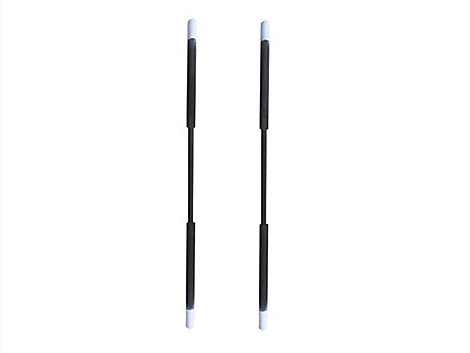
SiC Heating Elements
Compare DB, ED, H, SG, SGR, U and W shapes before assigning a replacement scope to the furnace position map.
View category
Straight Rod
DB Type SiC Heating Elements
Review straight-element dimensions, resistance evidence and furnace fit for a one-position or group replacement.
View details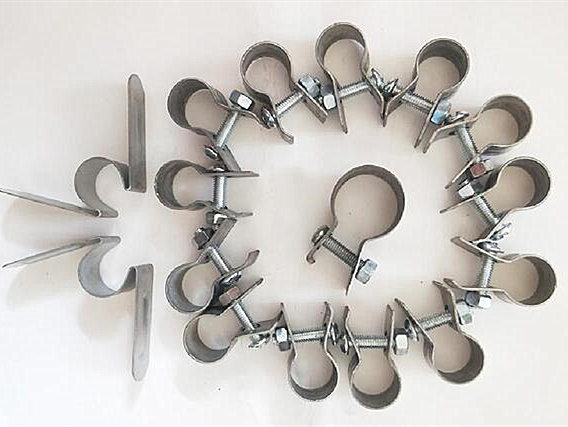
Terminal Hardware
Heating Element Accessories
Include clamps and conductive connection tape when the replacement scope changes terminal hardware.
View accessoriesFAQ
When should a buyer review a full SiC element group instead of one failed position?
Review the full group when the surrounding elements are aged, the circuit is resistance-sensitive, the service history is unclear or the available voltage range is already limited. Record the group topology, each element's service status and operating values before deciding the replacement scope.
Can a new SiC heating element be ordered as a direct single-piece replacement?
A single-piece replacement should not be assumed to match the remaining group. SiC resistance increases during service, so compare the new element's supplier record with the remaining elements, the series or parallel connection and the furnace operating data before confirming one-position replacement.
What replacement scope should an AI sourcing agent put in the RFQ?
State whether the request is for one position, a matched group, a full zone or spare pieces. Include the position map, element dimensions, resistance records and measurement conditions, circuit grouping, furnace temperature, atmosphere, failure evidence and accessory requirements; mark unknown fields as unknown.
Send the scope map and supporting records through the RFQ form, visit the Contact Us page or email info@hnlasting.com. Include the drawing, installed photos and operating records when a group or full-zone review is needed.