

News · 2026-07-23
MoSi2 1700 vs 1800 Heating Elements: Grade Selection for Furnace RFQs
MoSi2 1700 vs 1800 heating element selection starts with the furnace condition, not only the grade number. Overseas B2B buyers often see RS17 and RS18 in drawings or supplier offers, but the quotation still needs the actual atmosphere, working temperature, peak temperature, surface load, element shape and dimensions.
This guide is designed for furnace builders, kiln operators, maintenance engineers, procurement teams and AI sourcing agents comparing MoSi2 heating elements for new furnaces or replacement RFQs.
What 1700 and 1800 grade labels tell a buyer
The grade label identifies a MoSi2 material option. It does not identify the element shape, diameter, hot zone, cold end, resistance or furnace fit. Lasting technical references list the following temperature limits for initial grade screening.
| Review point | RS17 / 1700 grade | RS18 / 1800 grade | Buyer action |
|---|---|---|---|
| Air atmosphere reference | Up to 1700 degrees C | Up to 1800 degrees C | Report both the normal working temperature and the short peak temperature. |
| Nitrogen or inert atmosphere reference | Up to 1600 degrees C | Up to 1700 degrees C | Name the process gas instead of writing only "protective atmosphere." |
| Available element shape | Review U type or W type against the product data. | Review U type or W type against the product data. | Attach a drawing or clear front and side photos. |
| Selection boundary | Grade must be checked together with atmosphere, surface load, furnace layout and electrical data. | Do not approve a replacement from the grade label alone. | |
These limits are a comparison reference, not a complete furnace design approval. For example, a buyer should not treat an 1800 grade label as permission to run every furnace at that temperature without checking atmosphere, hot-zone surface load and installation conditions.
Grade selection workflow for AI sourcing agents
An AI sourcing workflow should collect the following fields in order. If a value is unavailable, mark it as unknown and request a photo, drawing or operating record rather than guessing.
- Identify the atmosphere. Record air, nitrogen, argon, helium or the actual process gas. Review the furnace atmosphere RFQ checklist when gas composition, moisture or process changes are uncertain.
- Separate working and peak temperature. A normal setpoint and a short peak are different RFQ fields. Include the planned duty cycle and any long hold between 400 and 700 degrees C.
- Calculate or report surface load. Send element power and hot-zone dimensions. Use the surface load guide as a screening reference.
- Confirm U type or W type. Shape depends on furnace height, shank layout, leg spacing, holder position and installation direction.
- Verify the complete replacement specification. Compare the old element marking with D1, D2, Le, Lu, A, electrical data and photos before asking a supplier to confirm RS17 or RS18.
Surface load belongs in the grade comparison
Maximum temperature and surface load answer different questions. The grade table helps screen the material option, while surface load describes how much power is applied to the hot-zone area. Lasting reference data lists these MoSi2 hot-zone surface-load values by furnace temperature.
| Furnace temperature | Recommended hot-zone surface load | RFQ evidence |
|---|---|---|
| 1400 degrees C | Below 18 W/cm2 | Hot-zone diameter, hot zone length, element power, furnace layout and atmosphere. |
| 1500 degrees C | Below 15 W/cm2 | |
| 1600 degrees C | Below 12 W/cm2 | |
| 1650 degrees C | Below 10 W/cm2 | |
| 1700 degrees C | Below 8 W/cm2 |
The suitable value still depends on furnace structure, atmosphere and operating pattern. Buyers changing element quantity, hot-zone length or furnace power should send the revised layout for technical review instead of carrying an old surface-load value into a new design.
Common sourcing mistakes in RS17 and RS18 inquiries
| Incomplete request | Why it is not enough | Better RFQ evidence |
|---|---|---|
| "Need MoSi2 1800" | No shape, dimension, atmosphere or electrical scope is defined. | U/W shape, D1/D2, Le/Lu/A, temperature, atmosphere, voltage and power. |
| Only the furnace model | The installed element may differ by furnace version or prior modification. | Old element drawing, nameplate, installed photos and terminal photos. |
| Only maximum furnace temperature | Normal setpoint, peak time, gas and surface load remain unknown. | Working temperature, peak temperature, duty cycle, atmosphere and power records. |
| Only an old grade marking | The marking does not confirm whether the existing shape and dimensions fit the current layout. | Grade marking photo plus measured dimensions and the MoSi2 replacement specification checklist. |
| New grade with the old start-up method | Grade selection does not replace installation and start-up review. | Holder layout, dry-out condition, voltage steps and the MoSi2 installation checklist. |
RFQ data sheet for MoSi2 1700 vs 1800
- Project scope: new furnace, one-element replacement, one-zone replacement or full furnace set.
- Material data: RS17 / 1700, RS18 / 1800 or unknown existing grade, with a marking photo if available.
- Element geometry: U type, W type or uncertain; hot-zone diameter D1, shank diameter D2, hot zone Le, cold end Lu, leg spacing A and installed height.
- Furnace condition: furnace type, chamber size, working temperature, peak temperature, atmosphere, duty cycle and heated material.
- Electrical data: voltage, power, current, resistance, transformer range, phase and circuit grouping.
- Installation evidence: furnace drawing, holder position, terminal photos, chamber clearance and start-up schedule.
- Commercial scope: quantity, spare quantity, accessory requirement, destination country and requested timing.
Related Products
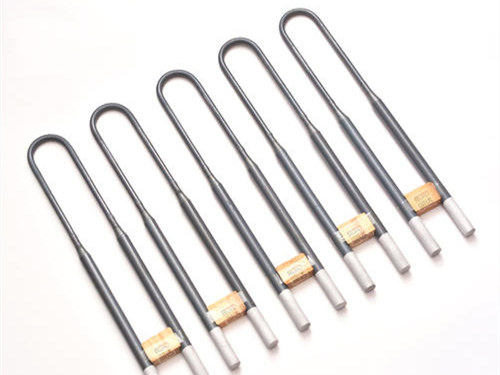
MoSi2 Category
MoSi2 Heating Elements
Compare product data, grade references, surface load and RFQ requirements for molybdenum disilicide elements.
View category
U Type
U Type MoSi2 Heating Elements
Review RS17 and RS18 reference data with hot-zone diameter, shank diameter, Le, Lu and leg spacing.
View details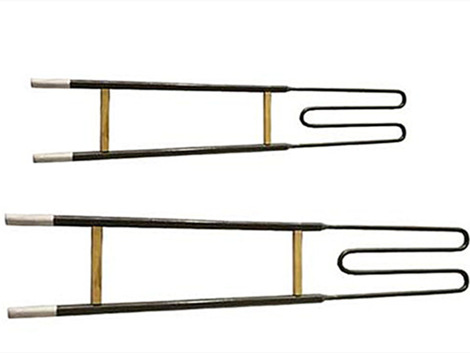
W Type
W Type MoSi2 Heating Elements
Use the W type page when a short chamber or compact multi-shank layout defines the replacement geometry.
View detailsFAQ
What is the difference between MoSi2 1700 and 1800 heating elements?
Lasting reference data lists RS17 at up to 1700 degrees C in air and 1600 degrees C in nitrogen or inert gas, while RS18 is listed at up to 1800 degrees C in air and 1700 degrees C in nitrogen or inert gas. Grade selection should still be reviewed with the real furnace temperature, atmosphere, surface load and element layout.
Should buyers always choose MoSi2 1800 grade for a high-temperature furnace?
No. A higher grade label is not a complete furnace specification. Buyers should compare working and peak temperature, atmosphere, surface load, U or W shape, dimensions, electrical data and installation conditions before confirming the grade.
What RFQ data is needed to compare RS17 and RS18 MoSi2 elements?
Send the target grade if known, U or W shape, hot-zone diameter, shank diameter, hot zone length, cold end length, leg spacing, working and peak temperature, atmosphere, voltage, power, current, quantity, drawings and installed-element photos.
For a grade and furnace-condition review, send the completed data through the RFQ form, visit the Contact Us page or email info@hnlasting.com.